


Servicing Of Fire Equipment: Practical Checklist For Facilities Managers
If you manage a mall, office block, warehouse, factory, parking garage or data centre, servicing of fire equipment is central to keeping the property ready for an emergency. It also gives facilities managers, safety officers and procurement teams a documented record of how equipment has been inspected, maintained and repaired.
TL;DR: Keep an accurate asset register, carry out documented routine checks, appoint appropriately registered service providers for formal servicing, close defects promptly and retain all service records. The correct scope and interval depend on the equipment, site risk, manufacturer instructions and applicable South African standards.
Routine checks and formal servicing help facilities teams identify defects before an emergency.
Why regular servicing supports fire protection and compliance
Regular fire equipment servicing supports readiness, compliance and risk reduction. Equipment must be accessible and functional when it is needed, while service labels, inspection reports and repair records give a property team evidence that maintenance has not been neglected.
South African requirements are not determined by one document alone. The National Building Regulations, local municipal by-laws, the Occupational Health and Safety Act context, relevant SANS requirements and the specific design of the building may all affect the maintenance programme. For portable extinguishers and hose reels, SANS 1475 is an important part of the servicing framework. Facilities teams can also consult SAQCC Fire for technician competency and registration context and review the fire-protection overview relating to the National Building Regulations.
Avoid treating service records as a filing exercise completed only before an audit. A current asset register and clear defect trail make it easier to plan budgets, follow up with contractors and show what action was taken after a problem was identified.
What should a fire equipment servicing programme cover?
The programme should reflect the actual equipment installed on the property. This may include portable fire extinguishers, fire hose reels, hydrants and emergency water supplies, detection and alarm systems, sprinklers, kitchen suppression, gaseous suppression, signage, cabinets and related components.
Responsibility becomes especially important on multi-tenant or multi-site properties. Tenant-owned equipment, landlord systems and specialist OEM-maintained systems should be recorded separately, with an accountable owner assigned to every asset. ERF Group’s commercial fire equipment servicing guidance provides further background, while the detailed requirements for portable extinguishers and hose reels are useful when defining the scope for these common assets.
Service frequency and the maintenance rhythm
A practical maintenance plan normally combines routine visual checks, formal servicing and periodic testing. Routine checks are often completed monthly by a fire warden or other designated person, but the interval should follow the site’s risk assessment, maintenance plan and applicable requirements. These checks focus on accessibility, visible condition, seals, pressure indicators, signage and obvious damage.
Portable fire extinguishers and hose reels are generally subject to annual servicing within the relevant SANS framework. Other equipment can follow different schedules, so the asset register should state the applicable interval for each category rather than applying one blanket rule. Formal work should be completed by an appropriately competent and registered service provider, with the technician’s registration details shown where required.
Pressure testing and hydrostatic pressure testing apply at specified intervals depending on the equipment type, construction, condition and relevant standard. High-traffic public areas, corrosive environments and equipment exposed to frequent handling or tampering may also justify additional checks between formal services.
Fire classes and selecting the correct extinguisher
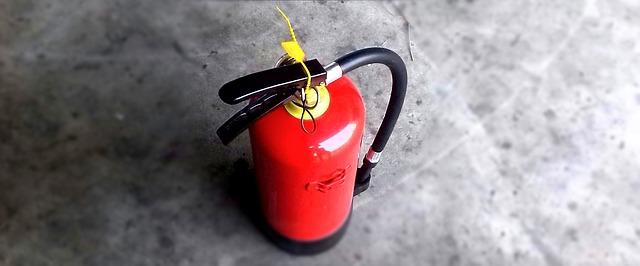
Servicing cannot correct an extinguisher that was unsuitable for the hazard from the start. Class A covers ordinary combustible materials such as paper, wood and cardboard. Class B applies to flammable liquids, Class C to flammable gases, Class D to combustible metals and Class F to cooking oils and fats. Class K is the broadly equivalent US designation for cooking-oil hazards.
Energised electrical equipment is an electrical hazard rather than a separate South African fire class. A suitable non-conductive agent must be selected, and the power should be isolated where it is safe to do so. Water must not be used where burning fuel, cooking oil or energised electrical equipment creates an additional hazard. The ERF guide to the different classes of fire explains these distinctions in more detail.
Monthly fire equipment inspection checklist
A short, repeatable checklist is one place where a list genuinely helps. Record the result against the relevant asset number and escalate defects rather than leaving them as open notes.
- Confirm that extinguishers, hose reels and hydrants are visible, accessible and unobstructed.
- Check that signs remain present, legible and correctly positioned.
- Look for corrosion, impact damage, missing components, broken seals or evidence of use.
- Check extinguisher pressure indicators where fitted and confirm that service labels remain legible.
- Inspect hose reels, hoses, nozzles, cabinets and brackets for visible damage or interference.
- Confirm that hydrant access routes and markers are clear.
- Record the inspection date, inspector and any corrective action required.
Assigning one accountable person per site prevents results from being scattered across emails. A central log should show when the issue was found, who owns the repair and when it was closed.
What professional firefighting equipment servicing should include
The exact work depends on the equipment, but professional servicing commonly includes inspection of valves, hoses, nozzles, gauges, seals, couplings and other wear items. The technician should identify defective parts, complete authorised repairs or recommend replacement, and perform pressure or hydrostatic testing where applicable.
After the service, the facilities team should receive usable documentation. This can include an inspection report, updated service labels, test records, technician details and other certificates relevant to the work. Record the current and previous servicing dates against each asset so that upcoming work can be forecast instead of discovered after it is overdue.
Fire hose reel inspection and maintenance
A fire hose reel must be more than visible. Professional servicing should confirm operation under the required pressure, hose and nozzle condition, coupling integrity, leaks, mounting security and smooth deployment. Bearings and moving parts should be assessed and maintained where applicable, while the surrounding access area and signage must remain clear.
The importance of servicing extinguishers and hose reels is especially relevant at busy commercial sites, where tampering, accidental damage and obstructions can develop between formal inspection dates.

Fire hydrants and emergency water supplies
Hydrant readiness includes the hydrant, valves, water supply, signage and the access route required by emergency teams. Maintenance can include checking valve operation, flushing, inspecting booster connections where installed, verifying the required flow and confirming that hydrant locations are properly recorded.
Facilities teams responsible for larger properties can use hydrant flow testing to understand whether the available water supply performs as required. ERF Group also explains why fire hydrant water supplies matter in the wider fire-protection system.
Fire detection, suppression and sprinkler systems
Where detection and suppression systems are installed, they should be managed as connected systems rather than isolated devices. Testing may need to confirm detector and alarm signals, panel responses, interfaces, release logic, interlocks, cylinder pressures or agent condition. The required work depends on the system design and the hazards it protects.
Specialist systems require appropriately competent technicians and system-specific evidence. Facilities teams can review ERF Group’s overview of fire detection and suppression systems and its guidance on testing and maintaining sprinkler systems when building the maintenance register.
Documentation and certification
A facilities-ready compliance file should contain a current asset register, routine inspection records, professional service reports, repairs, replacement records and applicable test certificates. Keep technician competency and registration evidence where the servicing category requires it, along with service label details and the last servicing date for each device.
Digital records make information easier to retrieve across multiple buildings, but the documents must remain tied to identifiable assets and locations. Record defect closure as carefully as the initial inspection. An audit trail showing that a problem was found but never resolved can expose a gap in the maintenance programme.
Installation, signage and accessibility
Equipment condition is only one part of readiness. Extinguishers, hose reels and hydrants must be positioned and mounted in accordance with the applicable design and requirements, remain readily accessible and be supported by visible signs. Changes to partitions, racking, tenant layouts or storage areas can affect travel distances and block equipment that was correctly installed originally.
During site inspections, look beyond the device itself. Check whether doors, stock, parked vehicles or new fixtures interfere with access. ERF Group’s guidance on clear fire signage explains why identification remains important when layouts are busy or visibility is reduced.
Training, drills and safe extinguisher use
Staff training helps people recognise the correct equipment and understand when evacuation is the safer response. Training can cover extinguisher selection, the P.A.S.S. method, emergency communication and maintaining an escape route. Fire drills should follow the site’s emergency plan, risk profile and any applicable workplace or municipal requirements, with attendance and findings documented.
If smoke is heavy, the fire is spreading quickly or a person is unsure of the correct extinguisher, they should evacuate and contact emergency services. Using the wrong extinguishing agent can intensify the hazard and place employees or occupants at greater risk.
Procurement, repairs and replacement decisions
Procurement teams can reduce maintenance friction by standardising approved equipment, compatible agents and spare parts across suitable sites. The register should also include repair-versus-replacement rules, lead times for specialist components and clear approval routes for urgent defects.
Severe corrosion, failed pressure testing, repeated faults, missing parts or equipment that no longer meets the relevant requirements may justify replacement. An extinguisher that has been used, even briefly, should be removed from service and assessed before it is returned with updated documentation.
Fire equipment servicing programme table
| Equipment | Routine site checks | Professional servicing focus |
|---|---|---|
| Fire extinguishers | Access, seals, pressure indicator, damage and signage | Condition, components, recharge, service label and testing where applicable |
| Fire hose reels | Access, visible hose and nozzle condition | Operation, leaks, couplings, mounting and pressure |
| Fire hydrants | Clear access routes and visible markers | Valve operation, flushing, water supply and flow testing as required |
| Suppression and sprinkler systems | Visible condition and panel status where applicable | System-specific components, release logic, agents, interfaces and test evidence |
| Fire detection systems | Panel status and routine alarm checks under the site plan | Detectors, signals, interfaces, cause-and-effect and documented testing |
Frequently asked questions
How often do portable fire extinguishers need servicing?
Routine visual checks should follow the site’s maintenance plan and risk requirements, often monthly. Formal servicing for portable extinguishers is generally annual within the applicable SANS framework. Confirm the correct interval for the specific unit and site.
Who should carry out pressure testing?
Pressure and hydrostatic testing should be completed by a competent, appropriately equipped and accredited service provider in line with the applicable standard and equipment requirements.
What should happen after a professional service?
The service label and asset record should be updated, and the facilities team should receive the relevant inspection report, defect information and testing or certification documents.
Closing defects and confirming service quality
A registered company should provide enough information for the facilities team to verify what was inspected, what failed and what happens next. Confirm the servicing date, last servicing date, service label and technicians registration number where applicable. The inspection report should separate completed work from outstanding repairs, and any compliance certificate must be understood in the context of the equipment and work it actually covers.
Some units require pressure testing or a full recondition at defined intervals. A stored pressure type extinguisher can have different internal components and test requirements from a cartridge-operated unit. The service provider should therefore identify the correct type, follow the relevant South Africa national standards and use compatible parts and extinguishing agents.
Roles, fire drills and emergency response
Fire wardens can support routine checks, staff awareness and documented fire drills, but they do not replace competent technicians for formal servicing. The occupational health and emergency plan should state who raises a defect, who authorises repairs and who confirms that the fire safety equipment has been returned to service.
Firefighting equipment is intended to aid fire response only when the incident is small, the correct equipment is available and the user has a safe escape route. If conditions are unsafe, smoke is increasing or the fire cannot be controlled, occupants should evacuate immediately and call emergency services.
Next steps for facilities managers
Begin with a site-by-site equipment audit and baseline register. Appoint a single coordinator, set the correct inspection and servicing intervals for every asset category, centralise the records and review outstanding defects regularly. This creates a programme that is easier to budget, manage and demonstrate during inspections.
Maintaining fire safety compliance across multiple sites
For businesses with several buildings, consistent records make fire safety compliance easier to manage. Use the same asset naming convention, inspection form and defect categories across every location, while allowing for each site’s specific needs. Regular inspections should confirm proper functioning, clear access and service status, and annual servicing should be scheduled before labels expire.
A comprehensive inspection should identify equipment that needs to be repaired, recharged, tested or replaced. Treat urgent defects as a high priority, record why the service is required and confirm when the equipment has been serviced. This helps businesses ensure compliance with applicable legal requirements without assuming that one certificate covers every system or location.
Plan fire equipment servicing with ERF Group
ERF Group helps commercial and industrial properties standardise fire equipment registers, routine inspections, formal servicing and supporting documentation. With more than 50 years of fire-protection experience, the team can support single properties and multi-site portfolios across portable equipment, hose reels, hydrants, detection, suppression and sprinkler systems.
To request an assessment or servicing proposal, share the number of buildings, approximate asset quantities, existing service records, recent audit findings and details of any detection or suppression systems. Contact us to discuss your site requirements.
Related Posts
Fire Extinguisher Prices in South Africa: A Practical Buyer’s Guide
TL;DR: Fire extinguisher prices in South Africa vary by agent, capacity, construction and supplier. Current…

Dry Powder Fire Extinguishers: Uses, Limitations and Buying Guidance
Dry powder fire extinguishers are widely used across commercial, industrial and vehicle environments because they…

9 kg Fire Extinguisher Prices: What Facilities Teams Should Compare
A 9 kg dry powder fire extinguisher is often selected for commercial, industrial and vehicle-related…
Leave a Reply