


Fire Suppression Systems for Commercial and Industrial Sites
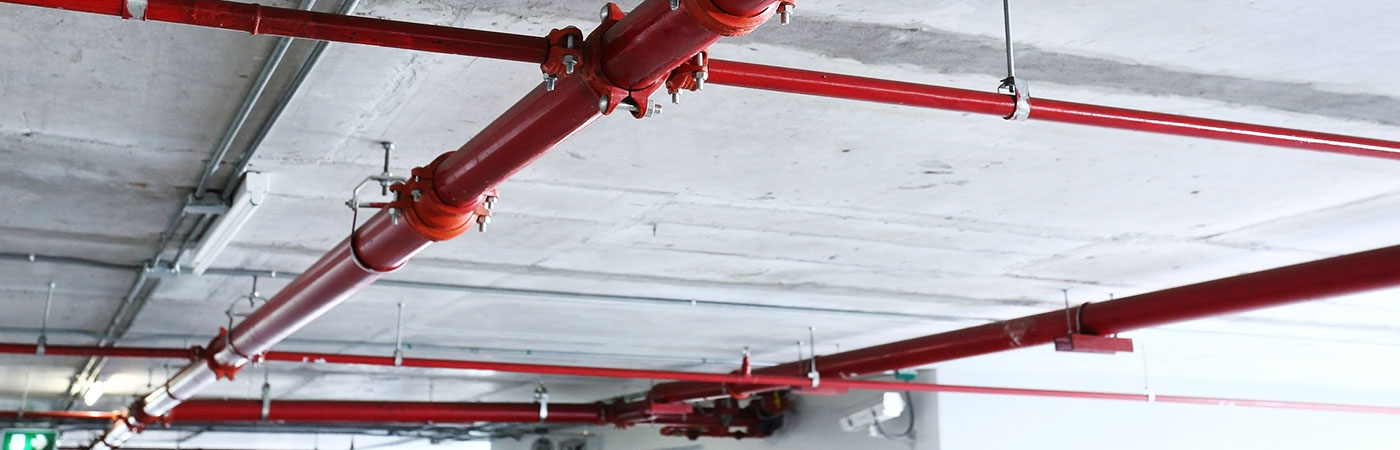
A fire suppression system is designed to control or extinguish a fire automatically within a defined risk area. For facilities teams, the important question is not simply whether a site needs “suppression”. It is which hazard must be protected, how quickly a fire could develop, what assets are exposed and how the system must interact with alarms, ventilation, fuel or power supplies.
ERF Group supports commercial and industrial clients with application-specific fire detection and suppression solutions. The process starts with the risk and the operating environment, then considers the appropriate detection method, extinguishing agent, discharge arrangement, controls and ongoing service requirements.
Where fixed suppression adds protection
Portable extinguishers remain essential in many buildings, but they depend on a trained person being present, identifying the fire and responding safely. Fixed fire suppression systems are used where a fire may grow too quickly, where equipment operates unattended, where access is restricted or where business-critical assets require an immediate response.
Typical applications include commercial cooking equipment, electrical and electronic enclosures, machinery, generators, vehicles, server or control environments, high-risk storage and specialised industrial processes. The correct solution is determined by the hazard, not by applying one system type across every area.
Detection and suppression perform different jobs
A fire detection system identifies signs of fire and initiates warnings or control actions. A suppression system releases an extinguishing agent into or over the protected area. In an integrated design, detection may activate alarms, shut down equipment, isolate energy sources, close dampers or trigger a suppression discharge.
Detection does not extinguish a fire, and suppression does not remove the need for an appropriate alarm and evacuation strategy. Facilities managers should therefore assess how both functions work together, including manual activation, fault monitoring and interfaces with other building systems.
Commercial kitchen suppression
Cooking oils, hot surfaces, extraction canopies and grease-laden ductwork create a concentrated fire risk. A commercial kitchen suppression system is typically arranged to protect specified appliances and associated canopy or duct areas, while also initiating necessary shutdown actions.
The system must suit the actual cooking line. Changes to fryers, griddles, extraction equipment or appliance positions can affect the protection arrangement and should be reviewed before the kitchen returns to service. Portable wet-chemical extinguishers support the wider fire plan, but they do not replace a correctly designed fixed system. ERF’s guide to Class K and Class F kitchen-fire terminology explains the distinction for South African facilities teams.
Suppression for electrical and electronic equipment
Control panels, switchgear, server cabinets and other enclosed equipment can require protection that limits secondary damage and avoids conductive agents. The enclosure volume, ventilation, equipment layout and potential ignition sources all influence the design.
Agent suitability must be assessed carefully. The fact that a product is marketed for electrical risks does not mean it is suitable for every occupied room, cabinet or piece of equipment. The design should consider discharge concentration, enclosure integrity, personnel exposure, post-discharge cleanup and the process for safely restoring equipment. See ERF’s guidance on fire protection for energised equipment for related portable-extinguisher considerations.
Vehicle and mobile-equipment protection
Mining, construction, waste-handling and industrial vehicles may combine hot surfaces, hydraulic fluids, fuel, electrical components and restricted engine compartments. A vehicle fire suppression system is designed around these specific zones and the conditions in which the equipment operates.
Selection should account for vibration, dust, temperature, wash-down practices, service access and the availability of automatic and manual activation. Nozzle position and pipework condition also need attention during routine inspections because mobile equipment is exposed to movement and physical damage.
Warehousing and storage risks
Storage protection must consider commodity type, packaging, rack geometry, storage height and aisle configuration. In some warehouses, ceiling-level sprinklers alone may not provide the required control within densely packed or high-piled racks. In-rack fire sprinkler systems may form part of the engineered solution where the storage arrangement demands it.
Any change to rack layouts, stored goods or maximum storage heights should trigger a protection review. A suppression design based on the original warehouse configuration may no longer suit a materially changed operation.
Industrial machinery and process hazards
Production machinery can create localised risks involving heat, friction, flammable liquids, combustible residues or enclosed processing areas. Local application suppression can focus protection on the hazard without treating the entire building as one uniform risk.
The assessment should identify how a fire may start, where it may spread and what must happen when the system operates. This may include stopping machinery, isolating fuel, controlling ventilation and alerting site personnel. Any shutdown sequence must be coordinated with operational and safety requirements.
How the protected risk shapes system selection
| Risk factor | Why it matters | Design question |
|---|---|---|
| Fuel or fire type | Agents behave differently on cooking oils, liquids, solids and energised equipment | What materials could burn? |
| Occupied or unoccupied space | Personnel safety affects agent and activation choices | Who may be present at discharge? |
| Open area or enclosure | Containment affects agent concentration and coverage | Can the protected volume retain the agent? |
| Ventilation and airflow | Air movement can remove an agent or redirect heat and smoke | What must shut down on activation? |
| Business-critical assets | Cleanup and downtime may influence the preferred approach | What secondary damage must be limited? |
Site assessment before design
A useful site assessment goes beyond room dimensions. It records the hazard, operating conditions, occupancy, equipment arrangement, extraction or ventilation, existing alarms, power or fuel interfaces and practical access for installation and servicing.
Facilities teams should also provide drawings where available, details of previous fire-protection work and information about planned operational changes. Accurate inputs reduce redesign, quotation gaps and scope disputes later in the project.
Installation, controls and system integration
A suppression installation may include detectors, control equipment, pipework, nozzles, cylinders or containers, manual release points, warning devices and shutdown interfaces. These components must operate as a coordinated system.
Commissioning should confirm that the installed arrangement matches the approved design, that cause-and-effect actions operate correctly and that the responsible site team understands alarms, faults, isolation controls and post-discharge procedures. Relevant records should be handed over for facilities and compliance files.
Servicing and documentation
A fixed suppression system needs planned inspection and servicing to remain dependable. The required schedule depends on the system, manufacturer instructions, site conditions and applicable requirements. Harsh environments, equipment changes or physical damage may justify additional checks.
Service records should clearly identify the system, protected area, work completed, faults found, corrective actions and any components requiring replacement. Facilities managers should also control changes around nozzles, detectors, pipework and protected equipment so that routine building work does not compromise coverage.
Information to include in a proposal request
- Site location and type of operation
- The room, equipment, vehicle or process requiring protection
- Known fuels, hazards and operating temperatures
- Occupancy and working hours
- Existing detection, alarm and suppression equipment
- Available drawings, photographs and equipment schedules
- Required shutdown or building-management interfaces
- Project timing, access limits and documentation needs
For multi-site or tender enquiries, include the number of locations, expected survey process and any standard reporting requirements. This helps suppliers compare the same scope and makes exclusions easier to identify.
Choose a system around the application
Effective fire suppression is application-specific. A commercial kitchen, electrical enclosure, industrial vehicle and warehouse do not present the same hazard, and they should not receive the same generic solution. The strongest design connects early detection, an appropriate extinguishing agent, reliable controls and a maintainable installation.
ERF Group brings more than 50 years of fire-protection experience to commercial and industrial sites. For a site assessment, system proposal or review of existing suppression protection, Contact us.
Related Posts

Electrical Fire Extinguishers: Choosing the Right Type for Energised Equipment
TL;DR: Fires involving energised electrical equipment require an extinguishing medium that does not conduct electricity…
In-Rack Fire Sprinkler Systems for Warehouses and High-Piled Storage
Warehouses with high-piled or densely packed storage present a particular fire protection challenge. Pallets, cartons…

What Fire Extinguisher For Electrical Fires: Practical Selection Guide
Electrical incidents rarely stay “electrical” for long. Faulty wiring, overloaded plugs, and failing components can…
Leave a Reply