


Class K Fire: Extinguishers, Kitchen Safety, and Fire-Class Comparisons

This guide is for facilities managers and procurement teams responsible for commercial kitchens in malls, office blocks, warehouses, and food production sites. You will learn what a Class K fire is, why kitchen fires involving cooking oils and fats behave differently, which fire extinguishers work, and how to build a practical fire safety plan that stands up to inspections and real incidents.
Key takeaways:
- Class K fires involve high-temperature cooking oils and animal fats, and they can reignite easily.
- A wet chemical fire extinguisher is the primary portable option for cooking oil fires in commercial kitchens.
- ABC fire extinguisher units and dry powder extinguishers can be appropriate for other risks, but they are not the correct primary tool for deep fat fryer oil fires.
- Correct placement, inspection records, and staff training are what prevent a small cooking fire becoming a major fire event.
Class k fire
A class k fire is a kitchen fire involving high-temperature cooking oils and animal fats. In some international standards, these are referred to as Class F fires. These fires burn hotter than many other fire types and can spread rapidly when oil splashes, overflows, or contacts an ignition source.
Typical fuels in commercial kitchens:
- Vegetable oils used in fryers
- Animal fats and rendered fats
- Oil and grease build-up around cooking equipment
- Oils and fats in pans, tilt skillets, and griddles
Why Class K fires reignite easily:
- The oil stays extremely hot and can remain above its ignition point even after the visible flames reduce.
- If the oil is not cooled and sealed from oxygen, it can reignite.
- Using the wrong extinguisher can spread burning oil and make the situation worse.
The recommended first step in a grease fire is to turn off the heat source immediately. If the fire is large or spreading, evacuate immediately and call the fire department rather than attempting to combat fires.
Class k fire extinguisher
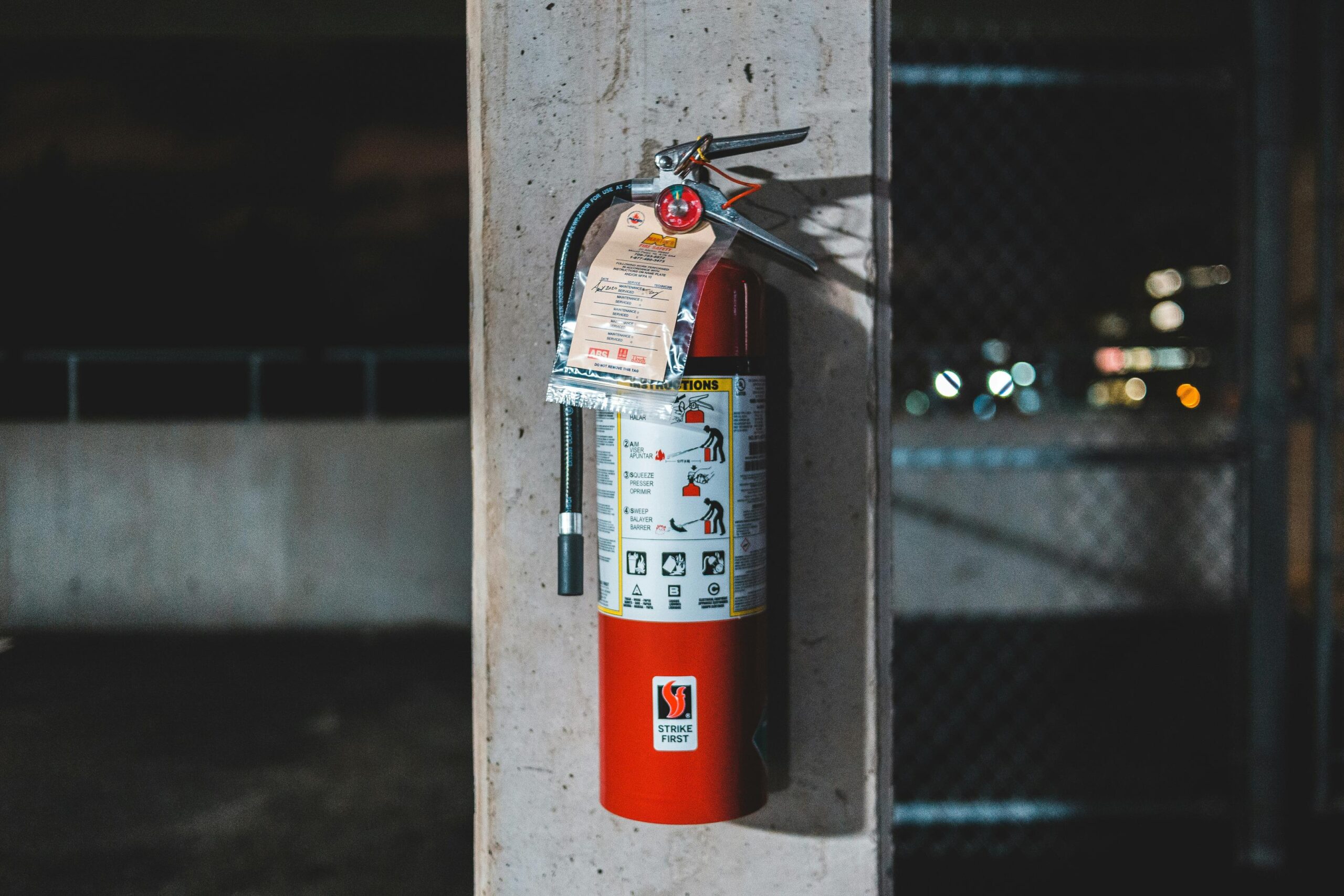
A class k fire extinguisher is a portable extinguisher designed for cooking oil fire risks. Most Class K fire extinguishers are wet chemical extinguishers that use an alkaline wet chemical agent (commonly potassium-based compounds such as potassium acetate) to cool the oil and create a soapy foam layer.
What to look for:
- Clear Class K rating on the label
- “Wet chemical” marking and operating instructions
- Service tag and inspection record present
- Placement where staff can access it quickly without crossing the hazard
Where to locate units in a kitchen:
- Near deep fat fryer lines but not so close that a person must reach over the hazard
- Near exits and along access paths so the person operating can keep an escape route
- Close to cooking appliances that present the highest fire hazards
Internal context for broader equipment planning:
- Read the different classes of fire to keep fire classification consistent across your sites.
Electrical fire
Commercial kitchens often include an electrical fire risk because cooking equipment is powered by electrical equipment, distribution boards, extraction fans, and control panels. Electrical fires involve energized electrical equipment and require non-conductive extinguishing agents.
Key safety points:
- Isolate power if safe and trained to do so.
- Use a suitable extinguisher for electrical equipment.
- Do not apply water where energized electrical equipment is suspected because of electrical shock risk.
For guidance on electrical fire response and selection:
Class k extinguishers
Class k extinguishers are designed to handle the unique properties of burning oil. They are typically wet chemical units that cool the oil and form a foam blanket that helps prevent reignition.
This is why Class K protection is a separate requirement in many kitchen fire safety programs. A comprehensive fire safety plan for commercial kitchens should include different types of fire extinguishers for different fire risks, not one “general” solution.
Class b fires
Class b fires involve flammable liquids like fuels, solvents, and oil-based paints. In some kitchens, Class B exposure can exist in maintenance stores, cleaning chemical areas, and service corridors. However, a Class K cooking oil fire is not the same as a Class B liquid fire. Cooking oils behave differently because of heat, volume, and the potential for splashing and reignition.
ABC fire extinguisher
An abc fire extinguisher is commonly a dry chemical extinguisher designed to cover Class A, Class B, and Class C risks. Many facilities place ABC units to cover general fire risks around a site.
ABC extinguishers can be useful in a kitchen environment for risks outside the fryer line, such as ordinary combustible materials and certain electrical equipment risks, depending on the unit rating. However, standard ABC extinguishers are generally less effective on high-temperature cooking oils and do not provide the necessary cooling or saponification effect to prevent reignition.
Class a fire
A class a fire involves ordinary combustible materials such as paper, wood, and cloth. In commercial kitchens, Class A exposures can include packaging, cardboard cartons, paper towels, and general waste. These materials can ignite if stored too close to hot surfaces or if housekeeping is poor.
Class a
From a fire classes perspective, Class A coverage is still important in kitchens, but it does not replace Class K coverage. Class A fire extinguishers or multi-class extinguishers may be relevant for storage rooms, service corridors, or general areas where ordinary combustibles are present.
Commercial kitchens
In commercial kitchens, the most common fire hazards cluster around:
- Deep fat fryers and high-temperature oil
- Extraction hoods and grease build-up
- Cooking equipment wiring and controls
- Housekeeping failures, such as blocked access to extinguishers and exits
A practical fire safety plan for commercial kitchens should include:
- The right Class K extinguisher coverage
- Clear placement and signage
- Staff training and drills
- A maintained hood suppression system where required
- Documented inspection and service records
Internal guidance that supports facilities compliance:
- Requirements for the supply and maintenance of portable fire extinguishers and hose reels
- Essential guide to servicing of fire equipment
Class b extinguishers
Class b extinguishers are designed for flammable liquid fires. They can support specific risks in plant rooms, chemical stores, or maintenance areas linked to kitchen operations. They are not a substitute for Class K extinguishers on deep fryer oil fires.
Class b
Class B risk is common in facilities environments, but kitchen oil fires should still be treated as Class K fires in commercial kitchens because the behavior and extinguishing method differ.
Class d
Class D refers to combustible metals. This is not a typical commercial kitchen risk, but it may be relevant in some industrial food production sites where metal powders or specialized processes are present.
Dry powder extinguishers
Dry powder extinguishers can be suitable for Class A, Class B, and Class C fire risks depending on the rating. They should not be used as the primary response for Class K cooking oil fires because they do not cool hot oil effectively and can increase the risk of flare-up or spread.
What Are Class K Fires
Class K fires are specifically associated with cooking oils and fats, which can ignite quickly in a kitchen environment when oil overheats. Class K fires can spread rapidly due to the high heat of burning oils, which can ignite nearby flammable materials.
First action sequence for a small cooking oil fire:
- Turn off the heat source immediately, if safe.
- If the fire is contained and you are trained, use the correct Class K extinguisher.
- If the fire is large, spreading, or you feel unsure, evacuate immediately and call emergency services.
Fire blankets can be effective for small fires contained within a pan by cutting off the oxygen supply. They are not a substitute for correct Class K extinguisher coverage where fryers and cooking oils are used.
Class K Fire Extinguisher Overview
A Class K fire extinguisher is usually a wet chemical extinguisher containing a potassium-based alkaline agent. The unit is typically labeled clearly for kitchen fires involving cooking oils and fats.
Placement guidance:
- Keep extinguishers visible and accessible.
- Do not store extinguishers behind obstructions.
- Ensure staff can reach the unit without moving closer to the hazard than necessary.
How Class K Extinguishers Work
A wet chemical extinguisher uses an alkaline agent to cool the oil below its ignition point and cut off oxygen contact. It also creates a soapy foam through a process called saponification. This foam blanket helps smother the fire and prevent reignition.
How it works in practical terms:
- Cooling action reduces oil temperature.
- Foam blanket seals the surface and limits oxygen supply.
- Correct discharge control reduces splashing and helps keep the agent on the burning oil.
Comparing Class K Extinguishers To Other Types
Class K versus ABC fire extinguishers
ABC units may be present for general coverage, but they are generally less effective on high-temperature cooking oils and do not provide the cooling and saponification needed to prevent reignition.
Class K versus Class B extinguishers
Class B extinguishers address flammable liquids, but cooking oils behave differently due to heat and volume. Class K is the correct specification for commercial kitchen deep fryer hazards.
Class K versus dry powder extinguishers
Dry powder units can knock down flames but typically do not cool oil sufficiently. They can also create visibility issues and contamination in food environments.
When To Use ABC Fire Extinguishers
ABC extinguishers can be suitable in commercial kitchens for:
- Class A fires involving ordinary combustibles in adjacent areas
- Some electrical equipment risks where the unit is rated for Class C fires
- General site coverage outside the fryer line
Do not treat an ABC extinguisher as the primary response for deep fat fryer fires.
When Dry Powder Extinguishers Are Appropriate
Dry powder extinguishers are commonly used for:
- Class A, B, and C coverage in mixed-risk environments
- Industrial areas where rapid knockdown is needed
- Some Class D fire risks when specialist powders are specified
They should not be used on cooking oil fires in commercial kitchens.
Class A, Class B, Class D And Electrical Fire Context
- Class A fires involve ordinary combustible materials such as paper, wood, and cloth.
- Class B fires are fueled by flammable liquids like gasoline and oil-based paints.
- Class C fires involve energized electrical equipment and require non-conductive extinguishing agents.
- Class D fires involve combustible metals and require specialized dry powder extinguishers.
- Class K fires involve cooking oils and fats and require wet chemical extinguishers.
Commercial Kitchen Fire Safety And Placement
Placement recommendations:
- Class K extinguisher near fryer lines and cooking equipment, with clear access
- ABC coverage positioned for general areas, not as the primary fryer tool
- Signage that marks equipment clearly and supports fast response
- Clear access paths so staff are not forced to reach over hazards
Pair portable equipment with suppression:
Automatic fire suppression systems in commercial kitchens are designed to detect extreme heat and automatically release wet chemical agents. Portable extinguishers support first response and backup coverage.
Internal reference for detection and system integration:
Selecting And Using Class K Extinguishers
Selection guidance:
- Choose units rated for Class K fires in commercial kitchens.
- Confirm the wet chemical agent type and certification.
- Align extinguisher size to the fryer and cooking equipment risk.
Safe use guidance for trained staff:
- Turn off the heat source immediately if safe.
- Use PASS method: Pull, Aim at base, Squeeze, Sweep side to side.
- Apply agent gently to avoid splashing burning oil.
- Stop and evacuate if the fire grows or spreads.
Standards, Testing, And Ratings
International references commonly used:
- UL testing requirements for Class K designation: UL Standards and certification overview
- NFPA portable extinguisher standard context: NFPA 10 overview
Class K ratings are pass or fail based on the test method and the extinguisher’s ability to control high-temperature cooking media safely.
Inspection, Maintenance, And Recharge
Routine inspection should confirm:
- Correct placement and clear access
- Tag present and in-date
- No damage, leaks, or missing seals
- Unit is appropriate for the kitchen hazard zone
Professional recharge and hydrostatic testing must follow the unit type and service schedule. Keep service records and tag placement consistent across sites.
Internal servicing guidance:
Training And Emergency Procedures
Training should include:
- Hands-on extinguisher training for kitchen staff
- Regular fire drills and evacuation practice
- Electrical fire scenarios in training
- Clear escalation rules for when to evacuate and call the fire department
If a grease fire is already spreading or too large to control safely, evacuate the area at once and contact emergency services instead of trying to extinguish it yourself.
Purchasing And Cost Considerations
Procurement should compare:
- Initial cost versus long-term service cost
- Availability of service support and recharge
- Compatibility with hood suppression systems
- Vendor certification and documented warranties
Use suppliers who provide clear documentation packs for audits.
Common Mistakes And Misuse To Avoid
- Using water on oil fires, which can spread burning oil violently
- Using CO2 directly on deep fat fryers as the primary solution
- Using dry powder as the primary response for cooking oil fire risk
- Storing extinguishers behind obstructions
- Failing to turn off the heat source when safe to do so
- Not training staff on safe use and evacuation rules
Using the wrong type of fire extinguisher on a Class K fire can make the situation worse, potentially causing the fire to spread.
Resources And Further Reading
External guidance used by facilities teams:
- NFPA 10 portable extinguisher standard
- UL certification overview
- SAQCC Fire
- South African fire protection overview
Trust-first kitchen compliance check
If you manage commercial kitchens across multiple sites, ERF Group can help you standardise Class K extinguisher placement, inspection schedules, and service documentation so your kitchen fire file is always audit-ready. Contact us
To speed up your request, share:
- Number of kitchens and fryer stations
- Current extinguisher types and locations
- Hood suppression system status
- Any recent incidents or audit findings
- Required service frequency and access constraints
Practical next step for safer kitchens
Class K fires require specialised wet chemical extinguishers, correct placement, and staff training to prevent rapid spread and reignition. If you want a site-ready recommendation and a documented service plan aligned to kitchen hazards, ERF Group can support supply and servicing across your locations. Contact us
Related Posts
Fire Extinguisher Prices in South Africa: A Practical Buyer’s Guide
TL;DR: Fire extinguisher prices in South Africa vary by agent, capacity, construction and supplier. Current…

Dry Powder Fire Extinguishers: Uses, Limitations and Buying Guidance
Dry powder fire extinguishers are widely used across commercial, industrial and vehicle environments because they…

9 kg Fire Extinguisher Prices: What Facilities Teams Should Compare
A 9 kg dry powder fire extinguisher is often selected for commercial, industrial and vehicle-related…
Leave a Reply