


Understanding Extinguisher Price: Find the Right Fit for Your Safety

Fire extinguishers are one of the simplest, most practical investments you can make to enhance safety from small fires—the kind that start in a kitchen, a storeroom, a workshop, or near electrical equipment and can become an emergency in seconds. Fire extinguishers are essential for protecting you and the property in homes and commercial spaces, providing immediate response to fire hazards. They are required by safety acts and regulations to ensure compliance and safety in both residential homes and business environments.
But extinguisher price in South Africa isn’t a single number. It depends on:
- the class of fire you need to cover (Class A, B, C, etc.)
- the type of extinguishing agent (water, foam, dry powder, CO₂, wet chemical)
- the size and rating (how much fire it can handle)
- compliance and maintenance requirements over time
In 2026, these prices vary significantly based on agent type, size, and intended application.
If you’re buying online, it’s smart to compare like-for-like: same agent, same size, same rating, same compliance mark, and the same mounting bracket / hose configuration. That’s how you find what you actually need, not just what looks cheapest.
Introduction to Fire Extinguishers
These portable products give you a chance to stop a fire early—only if it’s safe to do so and you have the correct unit for the risk.
Having a fire extinguisher equips people with the confidence and preparedness to deal with small fires easily and effectively. Fire extinguishers are easy to use and are designed to help people respond quickly in emergencies, ensuring safety for all occupants.
Match the extinguisher to the hazard
- Class A fire extinguishers are suitable for ordinary combustibles such as wood, paper, and cloth (think offices, shops, storage of cartons).
- Class C fire extinguishers are designed for energised electrical equipment (electrical distribution boards, UPS rooms, server racks).
- Dry powder extinguishers are common because they work across multiple everyday fire sources (paper, cloth, plastics), these are a popular general-purpose choice.
Ensuring that the correct extinguisher is selected and properly maintained for each specific hazard is essential for guaranteeing safety and compliance.
South Africa’s building fire protection “deemed-to-satisfy” requirements (SANS 10400 Part T) include requirements that portable extinguishers comply with relevant standards and be installed, maintained and serviced by competent persons according to specific servicing standards. (Ndlambe Local Municipality)
“Portable fire extinguishers installed in a building shall comply with the requirements in SANS 1910, and shall be installed, maintained and serviced by competent persons in accordance with SANS 1475-1 …” (Ndlambe Local Municipality)
Factors Affecting Price
1) Type of extinguisher (agent)
The types of extinguishers typically seen in South Africa include:
- Water extinguishers (often the most cost-effective option for Class A risks)
- Foam extinguishers (commonly used for Class A and flammable liquids / Class B risks)
- DCP / dry powder extinguishers (multi-risk coverage; popular for general areas)
- Carbon dioxide (CO₂) extinguishers (ideal where you need low-residue—often Class B and electrical risks)
- Wet chemical units (for cooking oil/grease risks in kitchens)
Specialised extinguishers (for lithium-ion battery risks or Class D metals) are typically the most expensive due to niche design and application requirements. A lithium-battery focused extinguisher example in SA is sold with a longer warranty and specific servicing requirements, which contributes to overall cost. (Sustainable)
2) Size + fire class rating
Bigger cylinders cost more because they hold more agent and can fight a larger fire. Importantly, fire class ratings indicate the size of fire the unit can effectively handle, so a higher-rated unit can mean more coverage per area—sometimes reducing the number of units needed across a space. (This is where price vs. coverage matters.)
3) Rechargeable vs disposable
- Rechargeable extinguishers can be serviced and refilled.
- Disposable units must be replaced after use or at end-of-life.
Most commercial-grade units are rechargeable, which changes the long-term economics (purchase price + maintenance).
4) Certification and build quality
Units marketed as meeting specific standards (for example SABS/SANS-related certification claims) typically cost more than uncertified products, because compliance testing, documentation, and traceability add cost. Local manufacturers and suppliers reference these compliance categories and technician competence expectations. (Safequip Pty Ltd)
5) The “hidden cost”: servicing + testing
Your extinguisher must be maintained. South African requirements connect portable extinguishers to competent servicing and standards-based maintenance (SANS 1475 is commonly referenced for servicing). (Ndlambe Local Municipality)
In addition, pressure equipment requirements can apply to certain pressurised vessels and testing regimes, which influences lifecycle cost. (Absolute Health Services)
Typical Price Ranges in South Africa (examples)
Below are real-world retail examples (prices change, and stock availability varies). Where possible, these examples show consumer-visible pricing (often presented as VAT-inclusive on SA retail sites).
| Type / Size | Typical use | Example SA price points |
|---|---|---|
| DCP 4.5kg | General risks (mixed areas) | ± R499 (example listed incl VAT) (Nedbank Personal Banking) to R799 (retail example) (Reserve Bank of South Africa) |
| CO₂ 2kg | Electrical / low residue | R920 (X-Rates) to R1,199 (Builders) |
| CO₂ 5kg | Larger electrical risks / plant areas | R1,899 example (Chamberlain’s) |
| Water 9L | Class A areas | ± R795 example (The Fire Guy) (other retailers may differ) |
| Foam 9L | Class A + Class B risks | ± R795 example (The Fire Guy) to R885 (Investing.com South Africa) |
| Wet chemical 6L | Cooking oil/grease (commercial kitchens) | ± R1,625 example (The Fire Guy) |
Bulk purchasing note: many online suppliers will quote lower per-unit rates for larger orders (common in offices, retail chains, facilities, and multi-site rollouts). If you’re making a bigger order, ask for a quote and confirm what’s included (brackets, signage, delivery, install).
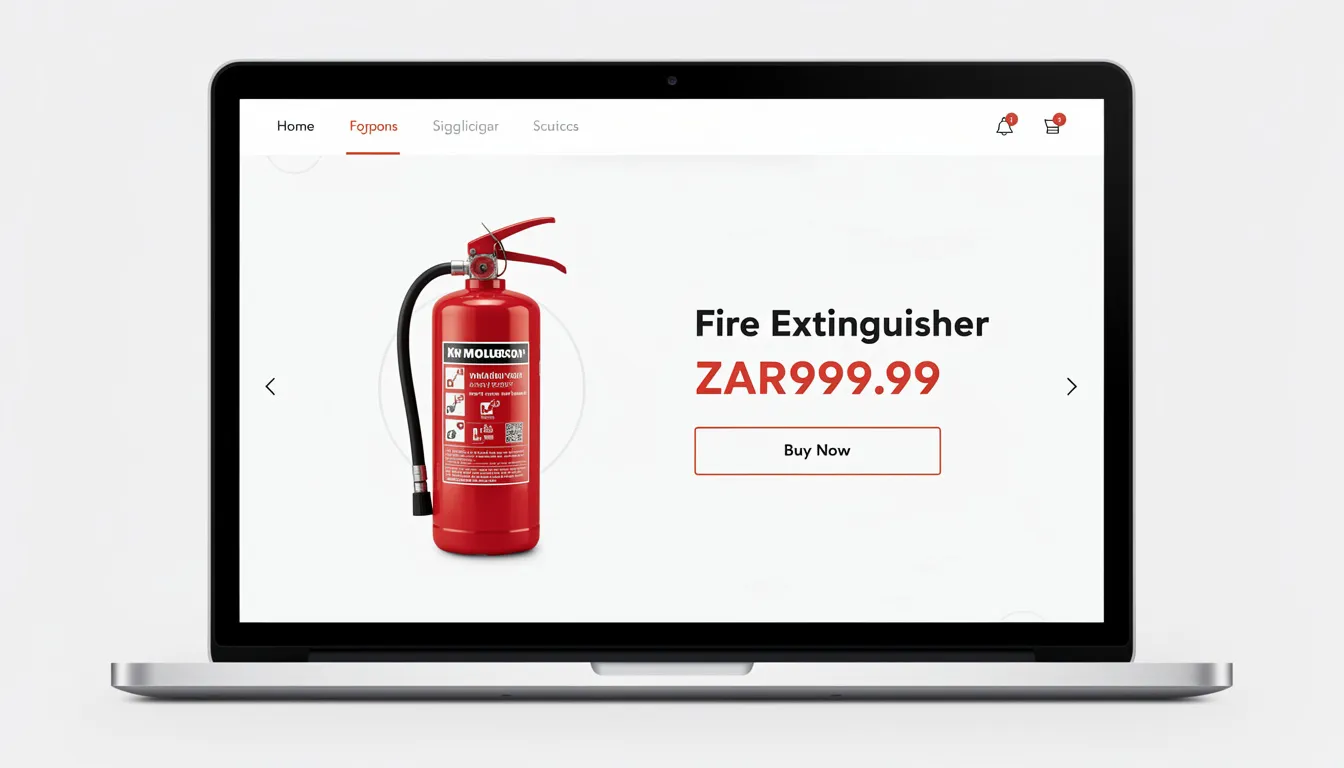
Choosing the Right Equipment
Step 1: Identify the likely fire risks in your space
- Paper storage, cartons, furniture → Class A
- Fuels, paints, solvents → Class B / flammable liquid fires
- Distribution boards, server racks, machinery control panels → Class C / electrical equipment
- Kitchens with frying and oils → Class K / cooking oil and grease risks
Step 2: Select by risk, not by price tag
A cheaper extinguisher that’s wrong for the risk is wasted money. The correct type and capacity must match your hazards and space layout.
Step 3: Place strategically
Extinguishers should be placed where crucial risks to property are identified (near exits or likely ignition points) and mounted so they’re visible and accessible. South African guidance ties placement and readiness to compliance and safety expectations. (Ndlambe Local Municipality)
Step 4: Don’t skip surveys
Some suppliers offer free site surveys/assessments to help you choose the correct types and quantities for your premises. (ACSAFE)
If you’re unsure, a survey is often the fastest path to “what’s needed” without overspending.
Making an Informed Purchase Decision
Before you pay, treat these matters like a total cost of ownership decision:
What to check when buying online
- Does the listing clearly state the extinguisher type, size, and intended class coverage?
- Is the price clear and does it include VAT (many SA retail listings show VAT-included pricing)? (Nedbank Personal Banking)
- What warranty is offered? A peace of mind 5-year warranty is common on many new units supplied under certain conditions, especially when serviced regularly by competent technicians. (speedies.co.za)
- Delivery and installation: some products list free delivery options depending on the retailer and basket size. (Builders)
- Confirm your checkout terms and required consent (returns, exchanges, and warranty conditions differ by retailer).
Budget for maintenance
Annual servicing is a common requirement for commercial compliance regimes, and many workplace checklists expect extinguishers to be serviced/tagged within the last 12 months. (elitefire.co.za)
Also remember: rechargeable units still cost money to inspect, service, and recharge after use.
SAQCC Fire guidance points to the expectation that companies servicing portable extinguishers require the appropriate permitting aligned with SANS 1475. (Fire Safety App)
Frequently Asked Questions
How much is a 4.5 kg fire extinguisher in South Africa?
For a common 4.5kg DCP unit, retail examples range from around R499–R799 depending on brand, retailer, and stock position. (Nedbank Personal Banking)
How much is the price of a fire extinguisher?
It depends on the type, class coverage, and size. Entry-level smaller DCP units are cheaper, while CO₂ and wet chemical units often cost more (for example, CO₂ 2kg around R920–R1,199, and wet chemical 6L around R1,625 in some listings). (X-Rates)
How long does a 2kg fire extinguisher last?
If you mean “how long will it discharge”: it varies by model and nozzle design, but many 2kg units discharge in seconds, not minutes. (If you mean “shelf life”: it depends on servicing and cylinder condition—plan for annual servicing and periodic pressure testing where required.) (SANS 10400 Regulations)
How big is a 9kg fire extinguisher?
A 9kg unit is physically much larger and heavier than a 4.5kg unit and is typically mounted in higher-risk or larger coverage areas. If portability is a concern, confirm whether your team can lift and operate it safely, or consider multiple smaller units positioned correctly.
Related Posts
Fire Extinguisher Prices in South Africa: A Practical Buyer’s Guide
TL;DR: Fire extinguisher prices in South Africa vary by agent, capacity, construction and supplier. Current…

Dry Powder Fire Extinguishers: Uses, Limitations and Buying Guidance
Dry powder fire extinguishers are widely used across commercial, industrial and vehicle environments because they…

9 kg Fire Extinguisher Prices: What Facilities Teams Should Compare
A 9 kg dry powder fire extinguisher is often selected for commercial, industrial and vehicle-related…
Leave a Reply