


Choosing a Fire Protection Company in Gauteng: A Guide for Facilities Teams

TL;DR
Choosing between fire companies in Gauteng should involve more than comparing the lowest quotation. Facilities and procurement teams need to assess service scope, technician competence, documentation, response coverage and the supplier’s ability to support the site over time.
A suitable provider should understand the property’s actual risk profile, explain what is included in the quotation and maintain clear records of inspections, servicing and corrective work.
Start with the needs of the site
A warehouse, office block, shopping centre, factory and commercial kitchen do not present the same fire risk. The right fire protection company should begin by understanding the building, its occupancy, the equipment already installed and the operational conditions.
This matters because a supplier that mainly handles portable extinguishers may not be equipped to design, install or maintain sprinkler, detection or suppression systems. Facilities teams should define the required scope before requesting comparable quotations.
For a multi-site portfolio, also consider whether the company can provide consistent service across locations. One clear programme, supported by usable records, can reduce the administrative burden on facilities and procurement teams.
Check the company’s service scope
Some fire protection companies focus on one product category. Others can support several parts of a commercial fire-protection programme.
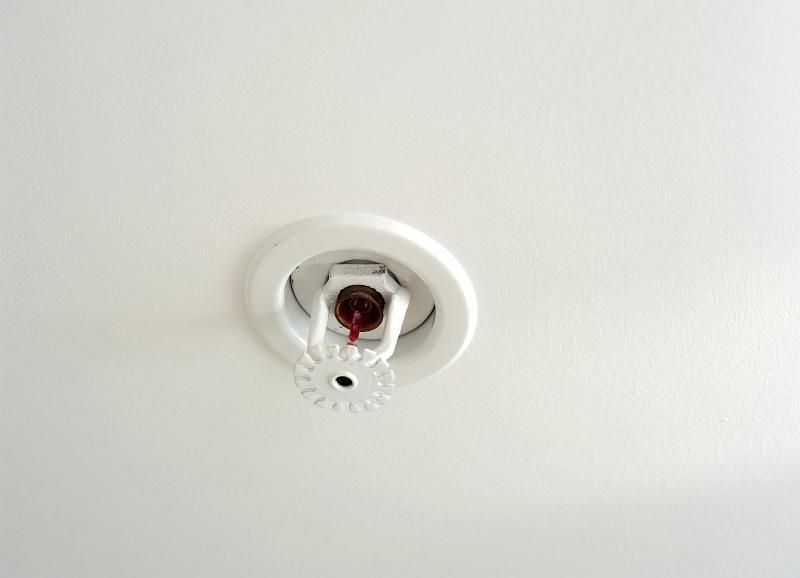
A broader scope may include fire extinguishers, hose reels, hydrants, fire signage, detection systems, suppression systems and sprinkler systems. The advantage is not simply convenience. It can help the facilities team coordinate inspections, planned maintenance, remedial work and procurement through fewer suppliers.
ERF Group supplies and services essential fire equipment and provides specialist support across detection, suppression and sprinkler systems. This makes it possible to assess the requirement as a connected fire-protection programme rather than a collection of unrelated products.
Match technical capability to the system
Ask who will perform the work and whether the company has suitable experience for the equipment or system involved. Portable equipment servicing, sprinkler installation and fire-detection maintenance require different knowledge and resources.
Where specialist competence, registration or approval is relevant, request evidence that applies to the work being quoted. Avoid relying on a broad claim that the business is “approved” without understanding who approved it, for what scope and whether that evidence remains current.
The applicable requirements may depend on the building, equipment, system design, risk profile, insurer, local authority and relevant South African standards. A responsible supplier should explain these dependencies without making universal promises.
Review documentation before appointing a supplier
Reliable documentation helps facilities teams demonstrate what was inspected, what work was completed and what still needs attention. It also supports budgeting and handover between staff, contractors or property managers.
Before appointment, ask to see examples of the records supplied after a visit. These may include service reports, equipment registers, defect lists, certificates where applicable and recommendations for corrective work.
The records should identify the site, equipment and work clearly. Vague invoices or generic job cards make it difficult to track recurring faults, missed equipment or outstanding repairs.
Compare quotations on the same basis
The lowest price may exclude call-outs, replacement parts, access equipment, travel, compliance documentation or remedial work. A quotation is useful only when its scope is clear.
Use a comparison table to prevent important differences from disappearing behind a single total.
| Question | What to look for |
|---|---|
| What equipment is included? | Quantities, types, locations and system boundaries |
| What work will be completed? | Inspection, servicing, testing, repairs and replacements stated separately |
| What is excluded? | Access equipment, parts, after-hours work and additional call-outs |
| What records are provided? | Service reports, asset registers and defect information |
| Who performs specialist work? | Relevant competence and experience for the system |
| What happens after defects are found? | Clear quotation, approval and close-out process |
Ask suppliers to clarify assumptions before evaluating price. This gives procurement teams a fairer comparison and reduces the chance of unexpected costs after appointment.
Look for a practical site survey
A site survey should do more than count extinguishers. It should help the supplier understand building use, changes to the layout, storage conditions, access restrictions and the condition of existing equipment.
Facilities teams should point out recent renovations, tenant changes, new machinery, altered storage heights or changes in occupancy. These details may affect what needs to be reviewed by a competent specialist.
A useful survey should finish with clear findings and priorities. Urgent defects, planned maintenance and longer-term system improvements should not be mixed into one unexplained recommendation.
Assess maintenance continuity
Fire protection is an ongoing facilities responsibility, not a once-off purchase. Equipment and systems need to remain accessible, identifiable and in serviceable condition between visits.
Ask how the company tracks service dates, outstanding defects and follow-up work. For multiple properties, confirm whether reports can be consolidated without losing site-level detail.
A reliable provider should also explain how emergency call-outs differ from planned maintenance. That distinction helps facilities teams budget sensibly while preserving a clear route for urgent technical support.
Consider response coverage across Gauteng
Gauteng facilities may be spread across Johannesburg, Ekurhuleni, Pretoria and surrounding commercial or industrial areas. Confirm that the company’s operating area matches the portfolio.
Response time should be discussed carefully. A supplier may be able to offer planned service coverage across a wide area without promising the same attendance time for every urgent call.
Ask who receives service requests, how jobs are logged and how progress is communicated. Fast acknowledgement and clear updates are often as important as a vague promise of immediate attendance.
Check experience in similar environments
A company that understands commercial and industrial sites is more likely to anticipate access rules, permit requirements, shutdown constraints and the need to work around operations.
Ask for relevant project examples or references where appropriate. The most useful evidence will resemble the property type, equipment and service complexity being considered.
ERF Group has more than 50 years of fire-protection experience. That history is most valuable when it translates into practical assessment, suitable products, dependable servicing and clear communication for today’s facilities teams.
Watch for common warning signs
Be cautious when a quotation does not identify equipment quantities, locations or system scope. A very low total can be misleading if key work is left for later.
Also question unsupported compliance claims, pressure to replace equipment without an explanation, missing service records or a supplier that cannot distinguish between portable equipment and engineered systems.
No responsible company should guarantee that one product, certificate or maintenance visit makes every building compliant. Fire-protection requirements are site-specific and may involve several responsible parties.
Questions to ask before appointment
Ask the same core questions of every shortlisted supplier:
- Which services will you provide directly?
- Who will perform specialist work?
- What documentation will we receive?
- How are defects quoted and closed out?
- Can you support all required Gauteng locations?
- How will planned maintenance and urgent requests be managed?
- What information do you need before finalising the scope?
The answers should be specific enough for facilities, procurement and health and safety teams to understand their responsibilities after the appointment.
Build a supplier relationship that supports the site
The best supplier relationship makes fire protection easier to manage over time. It should create visibility around equipment condition, service history, defects and upcoming work.
That does not remove the building owner or employer’s responsibilities. It gives the responsible team better information and a practical route for maintaining the equipment and systems under its control.
Speak to ERF Group
If you need a commercial fire protection company in Gauteng, ERF Group can assess the site, clarify the required service scope and prepare a practical quotation.
Leave a Reply