


10 Basic Response Procedures During a Fire Incident: An Essential Guide

When fire breaks out in a mall, warehouse, parking garage, office block or data centre, there are only a few moments to protect lives, limit property damage and keep business disruption under control.
For South African facilities managers, safety officers and procurement teams, these procedures are not just theory but a checklist for legal compliance, insurance expectations and real-world safety.
With over 50 years’ experience, East Rand Fire supports this with:
- Portable fire products: extinguishers, fire hoses, hose reels, hydrants, fire safety signage, vehicle brackets and spares
- Ongoing annual and monthly servicing of extinguishers and reels
- Guidance that aligns equipment placement with SANS 10400-T fire protection requirements and related standards.+1
This guide turns those standards into clear, human procedures that make your team aware of hazards and can actually follow during an incident.
Fire Safety, Compliance and “Own Safety” First
Fire occurs when fuel, oxygen and heat come together. In facilities this might be flammable chemicals in storage rooms, overloaded electrical circuits, or vehicles in underground parking. Once ignition happens, smoke and heat can spread and carry quickly through doors, windows and stairwells if not controlled.
South Africa’s SANS 10400-T focuses heavily on a facilities escape routes, emergency routes and the provision of extinguishers and hydrants – all aimed at ensuring personnel can reach safe egress in time.SANS10400 Building Regs SA+1
Your procedures must always prioritise:
- Aware of your own safety
- Rapid, coordinated action
- Clear responsibilities for staff, wardens and the incident commander
- Once evacuated and safe, standby for the appropriate responding authorities or Fire Departments arrival
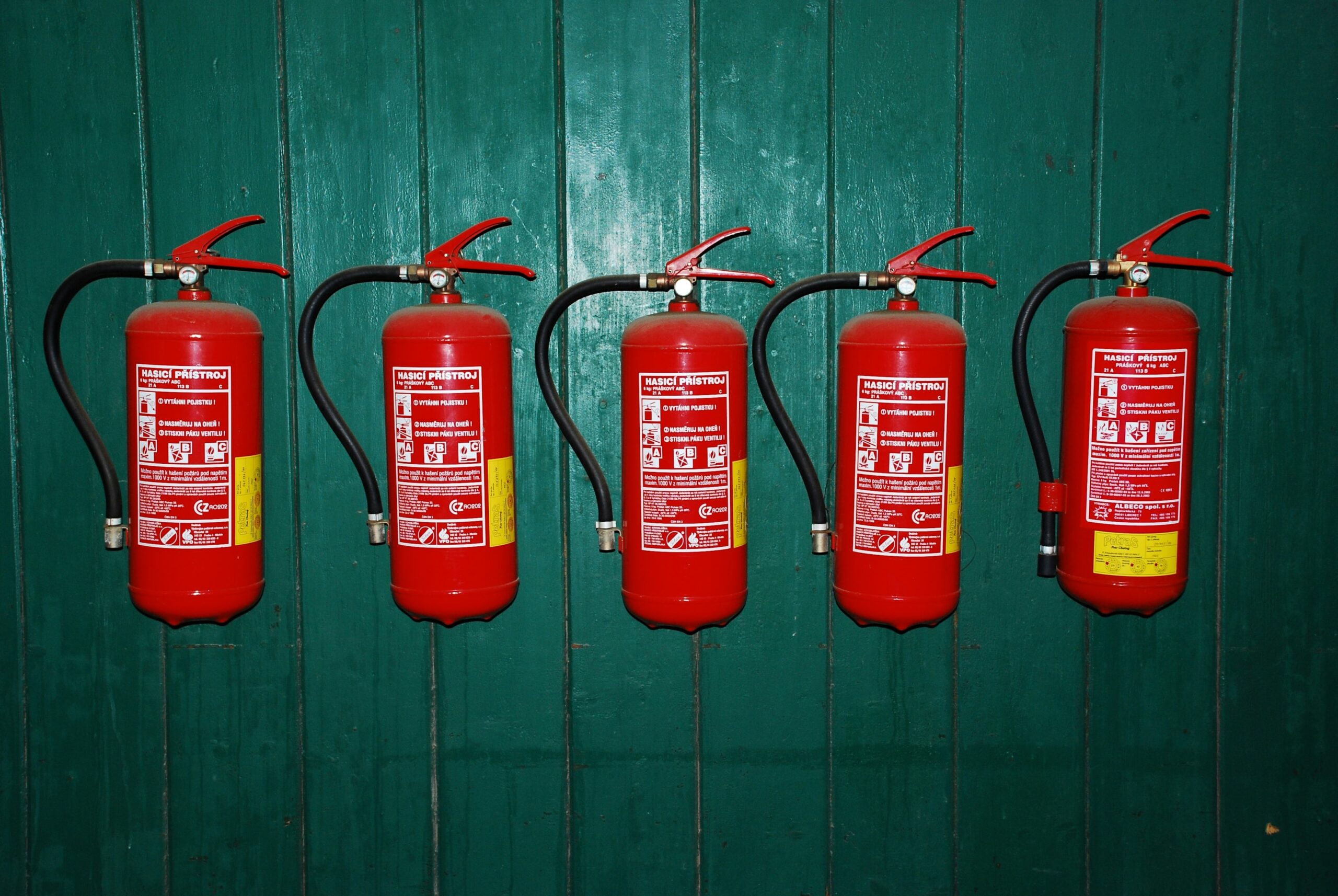
The 10 Basic Response Procedures (At a Glance)
Use this table as a quick-reference overview in your fire emergency and disaster evacuation plan:
| Step | Core Action | Main Objective | Primary Responsibility |
|---|---|---|---|
| 1 | Recognise danger & raise the alarm | Turn a small incident into a coordinated response | Any persons |
| 2 | Confirm fire alarm activation | Alert whole building and trigger integrated systems | Control room / safety officer |
| 3 | Call emergency services & internal contacts | Bring fire brigade and key decision-makers into play | Control room / designated caller |
| 4 | Assess the fire from a safe distance | Decide between evacuation only or limited first response | Safety officer / trained staff |
| 5 | Use extinguishers only if safe and trained | Stop small, contained fires before they grow | Trained personnel |
| 6 | Evacuate via safe routes & stairwells | Move occupants away from immediate danger | All occupants / floor wardens |
| 7 | Assist others without undue risk | Ensure visitors and mobility-impaired people are safely evacuated | Wardens / colleagues (“buddy plan”) |
| 8 | Proceed to evacuation assembly area | Enable accurate headcounts and prevent re-entry | All occupants / wardens |
| 9 | Do not re-enter until authorised | Avoid injury from hidden hazards and smoke | All occupants / incident commander |
| 10 | Report, record and review | Improve procedures and restore equipment readiness | Management, safety officers, service providers |
Below, each step is unpacked in more detail and aligned with practical building realities.
1. Recognise the Fire and Raise the Alarm
A fire emergency begins the moment you see or suspect smoke, unusual heat, flames or a burning smell. Staff should be trained to treat this as immediate danger, not something to “keep an eye on”.
The first actions are simple:
- Stop what you are doing.
- Warn the people around you.
- Activate the nearest manual fire alarm call point if the system hasn’t already triggered.
International guidelines emphasise that rapid alarm and evacuation are central to an effective emergency action plan. OSHA notes that an emergency action plan should clearly define designated actions employers and employees must take to ensure safety from fire and other emergencies.OSHA
2. Confirm the Fire Alarm System Is Operating
Modern fire alarm systems are designed to detect and warn occupants throughout the building. In South African commercial and industrial sites, alarms are often integrated with:
- Emergency lighting and exit signage
- Magnetic door holders that release to close fire doors
- Elevators / Lift controls that return the elevator to a safe floor and prevent further use
- Stairs and Stairwells are clear from obstruction
The control room or safety officer should quickly confirm that the alarm is sounding and visible beacons are flashing where required, and that any building management system (BMS) events are being logged.
The NFPA’s fire safety tip sheets stress the importance of tested, reliable detection and alarm systems as a foundation for safe evacuation and early response.NFPA
3. Call Emergency Responder Services
After the alarm, call the fire department and emergency services without delay, even if you believe the fire is small. When calling, attempt to provide:
- The exact location (site, campus, building, floor and area or room)
- The type of fire if known (electrical, flammable liquids, storage rooms, kitchen, vehicle, etc.)
- Whether anyone is trapped, missing or injured
At the same time, your emergency plan should specify who informs:
- Facilities or operations management
- Security control room
- The designated incident commander or safety officer
Good practice from workplace emergency planning guides is clear: don’t assume “someone else” has made the call – responsibility must be assigned.OSHA+1
Resource: OSHA’s guide on evacuation plans and procedures explains how to integrate calling emergency services into a formal emergency action plan.OSHA+1
4. Assess the Fire From a Safe Position
Before anyone attempts to use an extinguisher or hose reel:
- Stand at a point where you have a clear escape route behind you.
- Judge the size and spread of the fire, and the amount of smoke.
- Note any special hazards such as flammable chemicals in storage rooms, gas cylinders, fuel or server rooms.
If the fire is larger than a small bin, spreading quickly, or filling the area with smoke, the correct response is immediate emergency evacuation and door closure, steer clear of attempted firefighting.
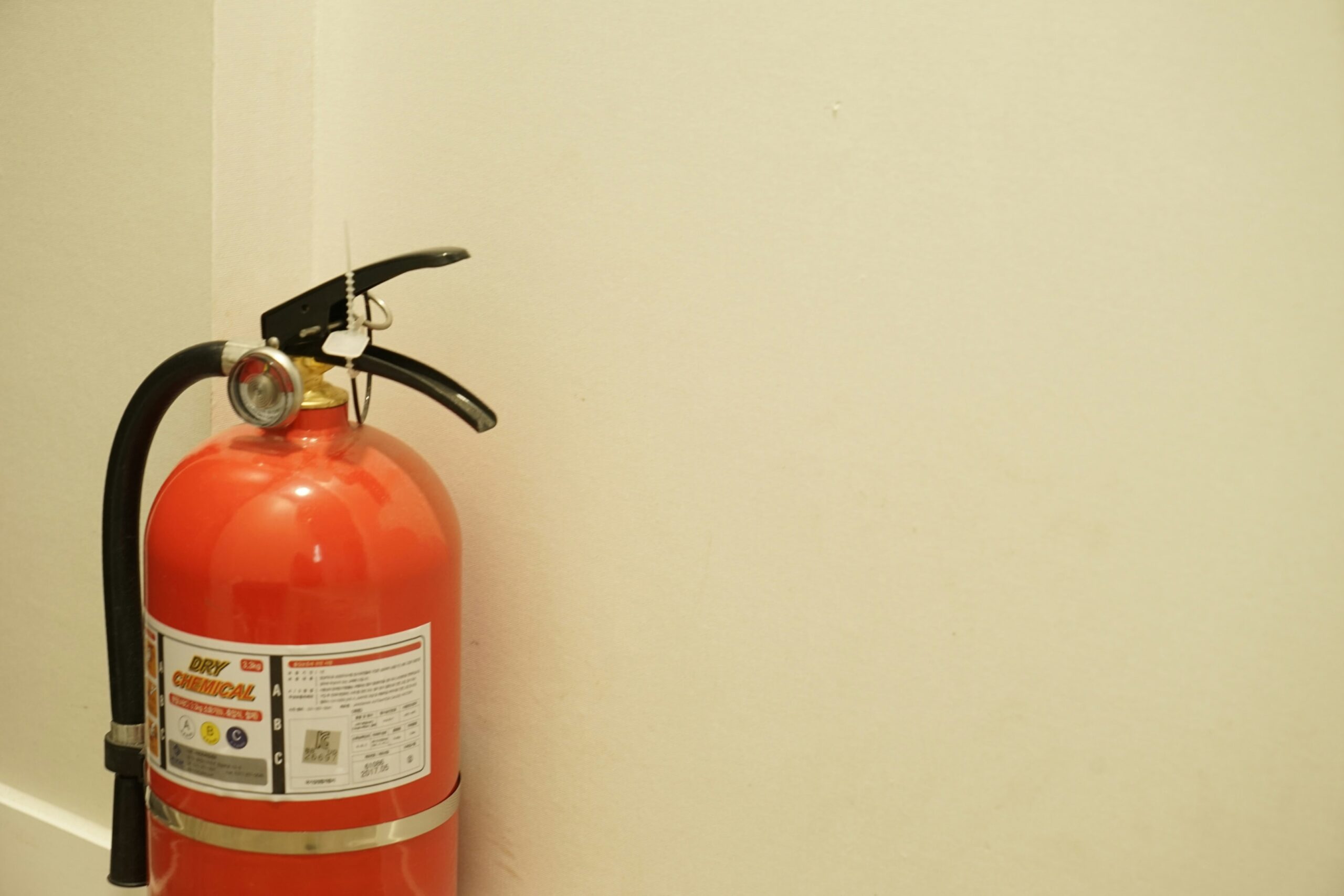
5. Use Fire Extinguishers Only if It Is Safe and You Are Trained
Portable fire extinguishers are designed for small, early-stage fires. They are most effective when:
- The fire is still localised, for example in a waste bin, small appliance or a confined area.
- The correct class of extinguisher is used for the fuel (e.g. electrical, liquids, cooking oils).
- The person operating the extinguisher has received basic training and remains calm.
- Do not attempt to operate without training
Crucially, your back should always face the nearest exit so you can withdraw if the fire intensifies.
This is where the practical value of ERF Group’s work shows up: choosing the right extinguishers, mounting them correctly on walls and vehicle brackets, and maintaining them through annual and monthly inspections means they are ready, visible and dependable when someone grabs one in an emergency.
6. Evacuate Safely Using Stairs and Marked Routes
For most occupants, the correct action in a fire is simple: evacuate.
Emergency evacuation procedures should instruct people to:
- Leave immediately when they hear the fire alarm, without collecting belongings.
- Follow exit signs to the nearest safe stairwell and never use elevators.
- Keep to the side in stairwells so emergency responders can move up if needed.
- Stay low if there is smoke, as the air is cleaner near the floor.
OSHA’s evacuation guidance notes that employees designated to assist with evacuations must know the workplace layout and alternative escape routes if primary routes are blocked.OSHA
Resource: OSHA’s Evacuation Plans and Procedures eTool gives practical examples of how to design and communicate escape routes, including secondary routes if the primary one is unsafe.OSHA
7. Assist Others and Use a “Buddy Plan”
In malls, office towers and campuses, not everyone is familiar with the building or equally able to move:
- Visitors may not know where the exits or stairwells are.
- Some occupants may use wheelchairs, walking aids or have vision or hearing impairments.
- Contractors and temporary staff may not know the evacuation assembly area location.
Your plan should formalise a “buddy plan” in which colleagues and wardens:
- Check nearby offices, toilets and storage rooms on their way out.
- Escort people with mobility or sensory challenges.
- Help to close doors and windows behind them to slow fire and smoke spread.
According to NFPA and other international fire safety bodies, regular drills and clear role assignment help avoid panic and confusion when a real alarm goes off.NFPA+1
Resource: NFPA’s free fire safety tip sheets highlight the importance of practising escape plans so people react calmly and instinctively during an emergency.NFPA
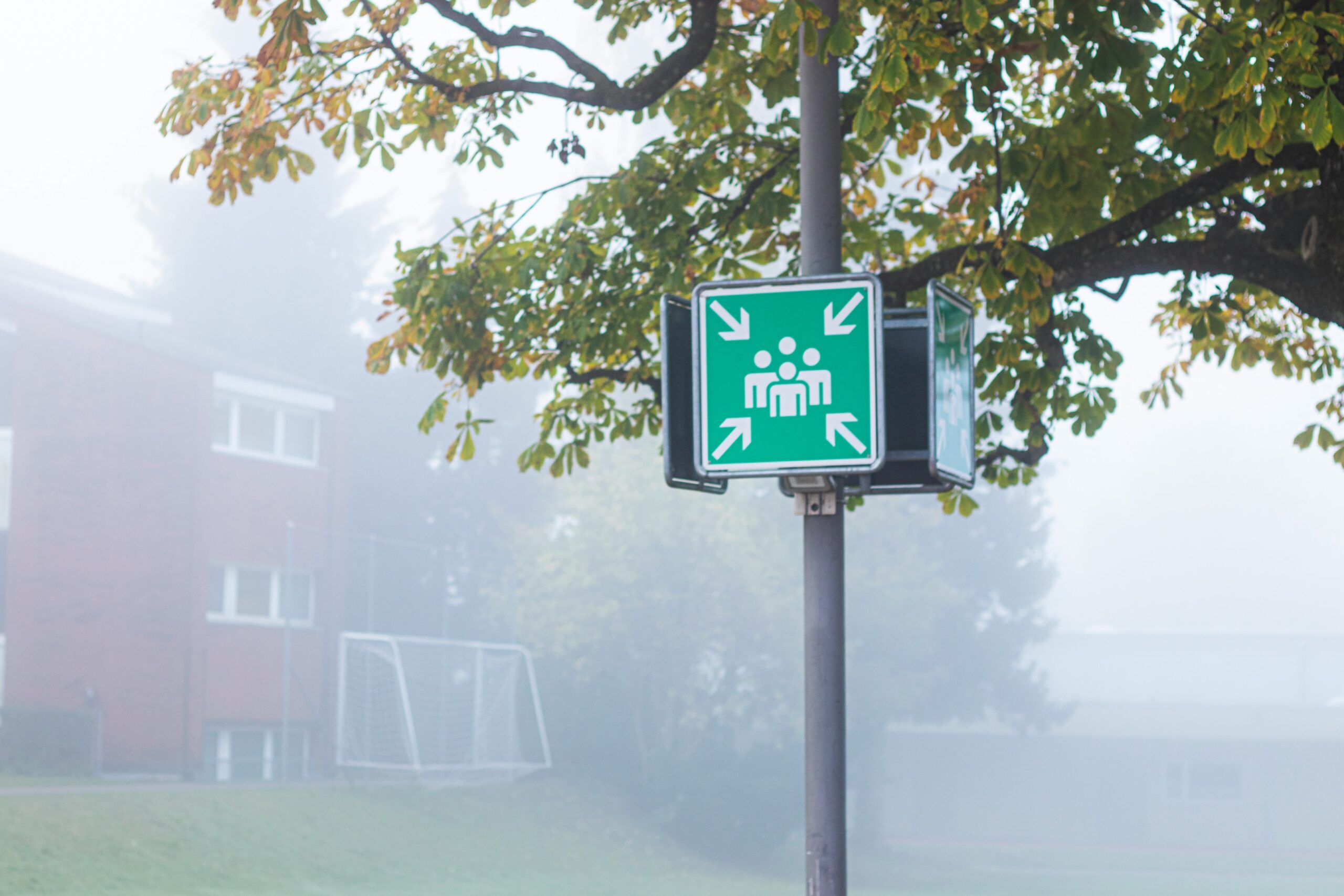
8. Move to the Emergency Evacuation Assembly Area and Stay There
Once outside, staff and visitors must not drift off or stand near entrances. Instead, they should:
- Adhere to the evacuation plan
- Proceed directly to the signed emergency evacuation assembly area, ideally positioned away from the building, falling glass and smoke.
- Remain there until instructed by the incident commander or emergency responders.
Floor wardens and safety officers can then conduct headcounts and compare them with area registers or visitor logs to identify anyone who is missing within the campus community or facility. This is only possible if people stay put and do not re-enter the building or leave the site without permission.
9. Do Not Re-Enter Until Authorities Declare It Safe
Even when flames are no longer visible, a recently burnt building can contain serious risks:
- Hidden hotspots behind walls or in ceiling voids
- Unstable structures, damaged stairwells or weakened slabs
- Pockets of toxic smoke or depleted oxygen
Fire and building regulations are clear: occupants may only re-enter once the fire brigade or competent incident commander has formally declared the building safe, sometimes after ventilation and further inspection.Ndlambe Local Municipality+1
10. Report, Record, Service and Review Evacuation Procedures
After the incident, the focus shifts to learning and restoring full protection:
- Care for people
Anyone exposed to smoke, heat or stress should receive appropriate medical attention or debriefing. - Inspect and service fire equipment
Any extinguisher, hose reel, hydrant or fire hose that was used must be recharged, tested and recertified by a competent service provider. South African standards such as SANS 10105-1 govern the control and servicing of portable fire equipment. - Update procedures and training
Capture what went well and what failed: were exits blocked, did people know the routes, did alarms function correctly, were extinguishers easy to find? Feed those findings back into the fire emergency plan, training and drilling schedule.
East Rand Fire can support this phase by replacing or servicing extinguishers and reels, checking hydrants and updating fire safety signage so that your system is fully ready before operations return to normal.
Integrating Fire Alarm Systems, Protection and Procedures for a Fire Emergency
Fire safety is strongest when equipment and procedures work together:
- Fire alarm and detection systems detect and warn.
- Portable fire equipment (extinguishers, hose reels, hydrants) enables limited, early intervention.
- Sprinkler systems and other fixed protection tackle growing fires automatically.
- Evacuation procedures and drills ensure people reach safe egress routes quickly.
South African guidance on workplace emergency preparedness emphasises that planning, training and practical drills are essential, especially in high-occupancy buildings. +1
Resource: For a South African perspective, see SafetyCloud’s guide to workplace emergency preparedness, which highlights planning, training and fire drills as key pillars of readiness.
When combined with regular annual and monthly inspections of extinguishers, hose reels and hydrants, your 10 response procedures become more than a checklist: they become a practical fire incident playbook that staff can trust.
Related Posts
Fire Extinguisher Prices in South Africa: A Practical Buyer’s Guide
TL;DR: Fire extinguisher prices in South Africa vary by agent, capacity, construction and supplier. Current…

Dry Powder Fire Extinguishers: Uses, Limitations and Buying Guidance
Dry powder fire extinguishers are widely used across commercial, industrial and vehicle environments because they…

9 kg Fire Extinguisher Prices: What Facilities Teams Should Compare
A 9 kg dry powder fire extinguisher is often selected for commercial, industrial and vehicle-related…
Leave a Reply